
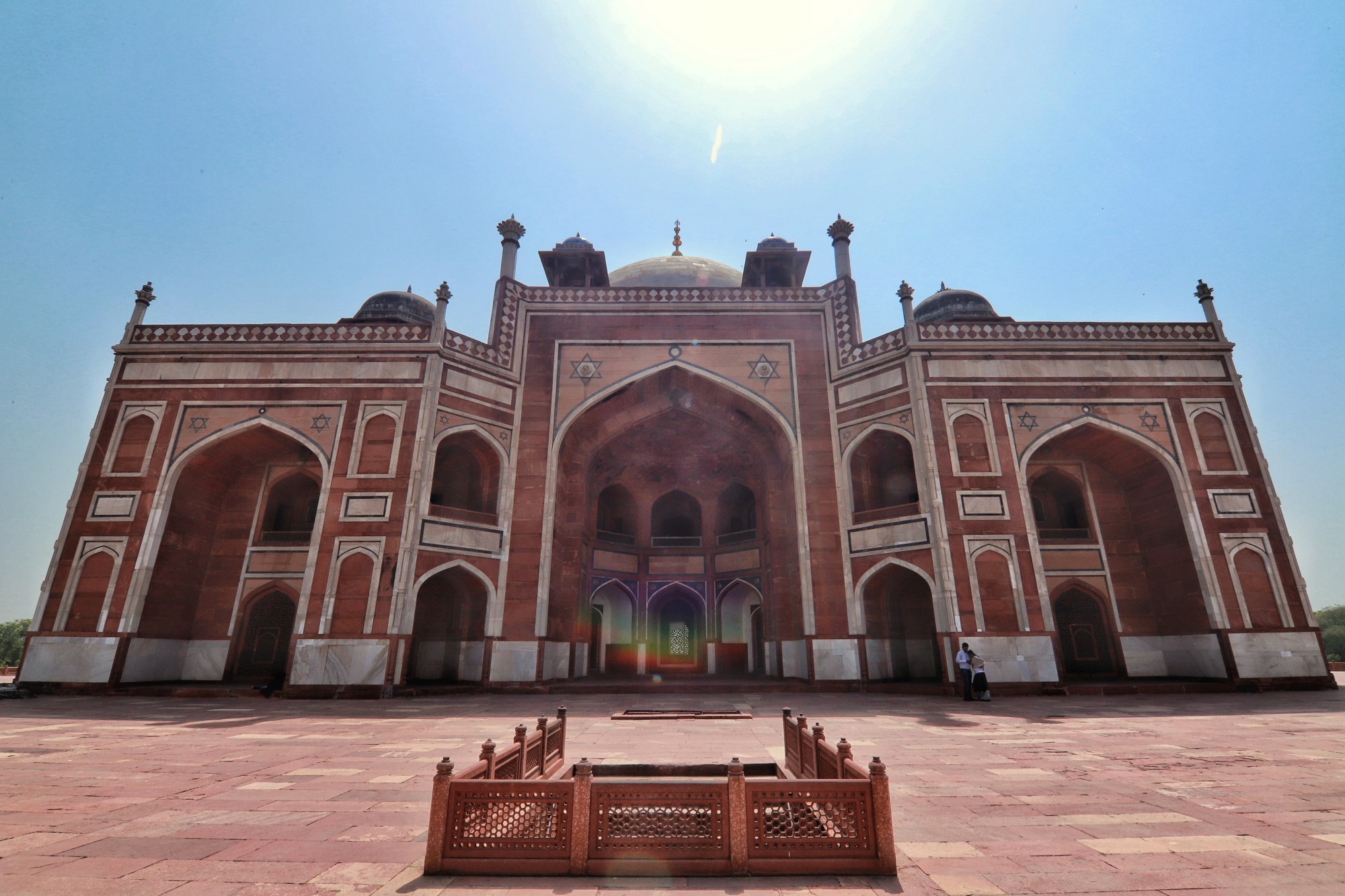
The Mughal Dynasty and architecture has fascinated me since childhood. Such huge forts, tombs, gardens and monuments, all in perfect symmetry. Centuries have passed, yet the royal feeling and the essence can still be felt in all these pieces of art.
Humayun’s Tomb is one of them. Built in 1565 by the Persian architect Mirak Mirza Ghiyath, it was the first garden tomb on the Indian Subcontinent, which is why it is always peaceful and pleasurable to go there.
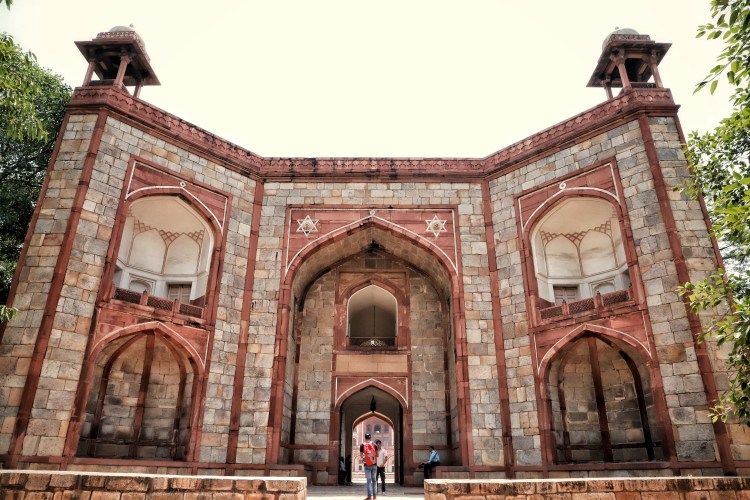
As we walk inside the complex upon entry, there’s a small gateway named Bu Halima Gateway. It was added later to the complex. From there we walk forward along the beautiful paved path, only to witness the first beauty, ‘The West Gate’. Earlier South Gate was made for entry but then it was closed and The West Gate became the only gate open to the public to enter now. The gate has small rooms or chambers inside which have big information boards with pictures where you can read about the history, architecture and design of the tomb including the restoration by Aga Khan Trust. 3D model of the whole complex is also on display.
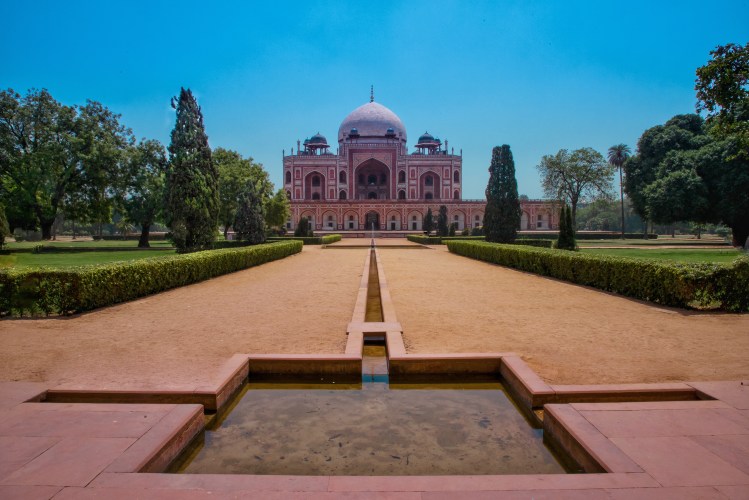
Exiting from the West Gate, we get this first glimpse of the incredibly beautiful Humayun’s Tomb, standing strong even today for us to witness it’s glory. It was constructed by red sandstone and stands on a 7m high platform.
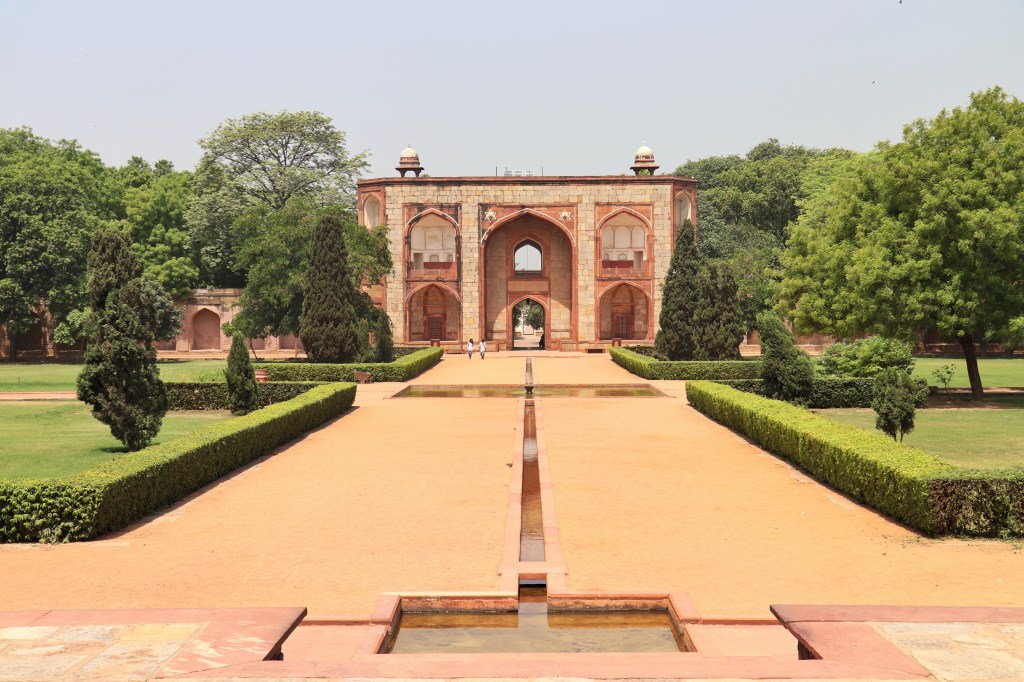
The Cha Bagh, meaning ‘The Four Gardens’ is heavenly and in a quadrilateral shape that leads us to the Tomb connected by a staircase and is laid out in such a way that it is said to represent the garden of Eden. Dissected by water bodies twice, this garden is one of the reasons why it’s called the ‘Garden of Tombs’. As you’ll walk closer, you’ll fall more and more in love with the monument.
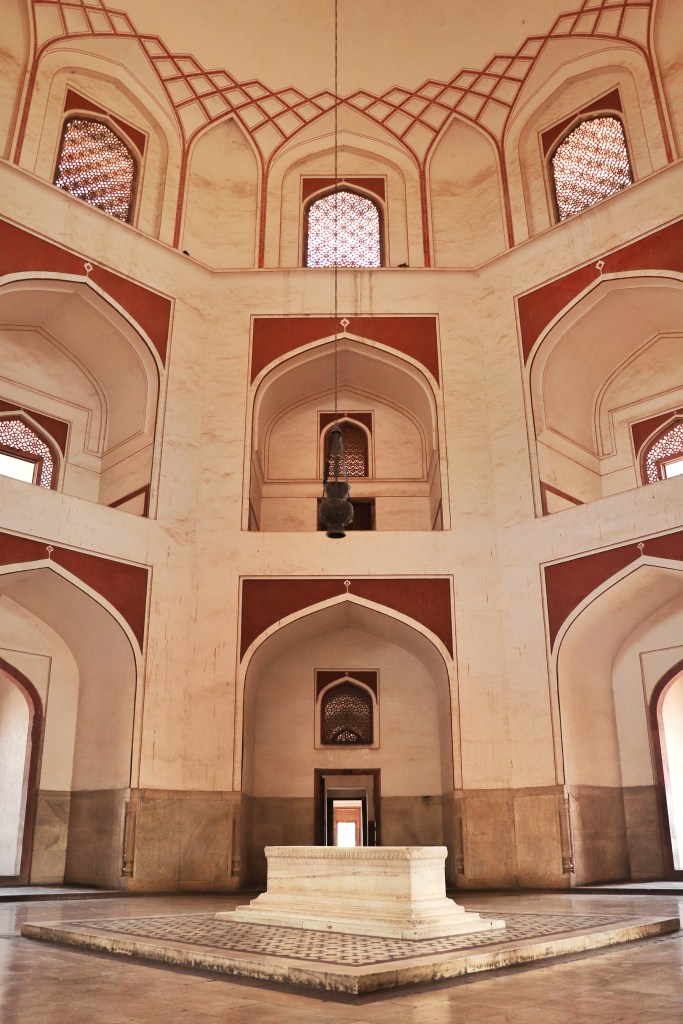
The inside of the tomb is constructed from white marble, with insertions of black and red marble in certain areas. Emperor Humayun’s sarcophagus is at the very centre of the tomb who stumbled to his death down a steep flight of stairs. It was hard to comprehend when we got to know that the construction of this tomb started in 1956, which is 9 years after Humayun’s death. So basically when he died, his body was laid to rest in Purana Qila, then transferred to Kalanaur in Punjab and later after his dearest and chief wife, Hamida Banu Begum commissioned this tomb, he was buried in a grand way here.
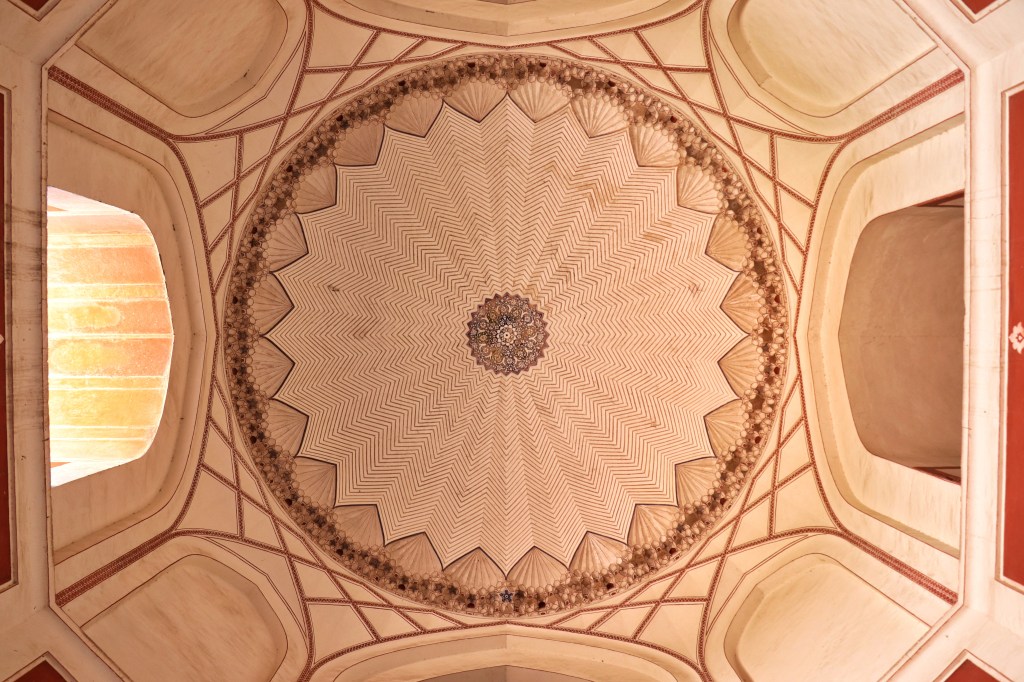
The ceiling on the top of the Emperor’s Tomb seems to us like the divine eye crafted by humans. Apart from the central burial chamber, are there four secondary chambers that has a variety of tombs as well. The most impressive thing was that the tomb has also got a 24-carat gold finial that has been installed atop the tomb’s majestic dome.
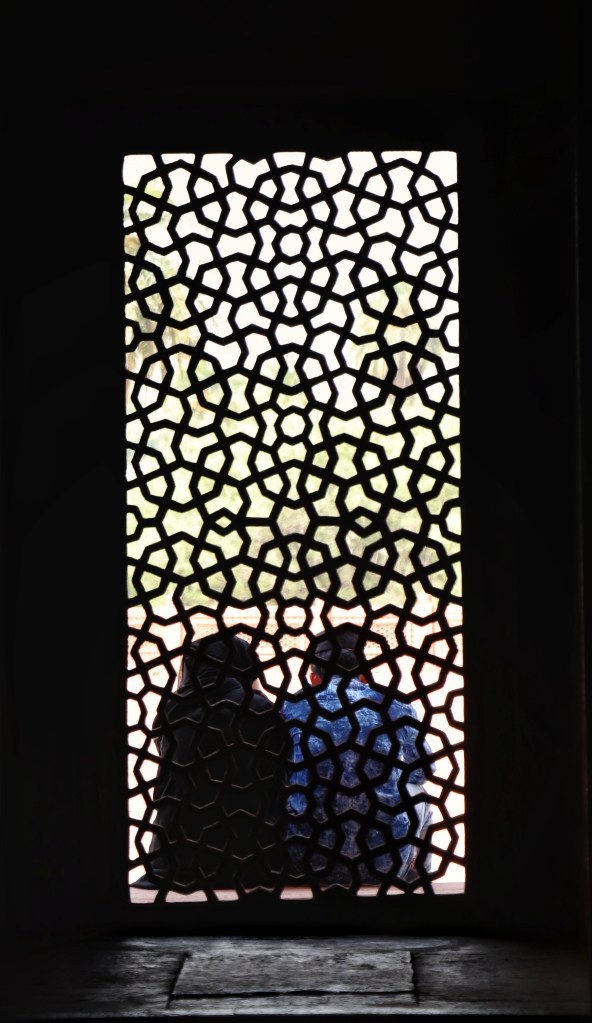
Apart from the Humayun tomb complex and gardens, we also saw various other monuments, gardens and tombs located outside the central complex.
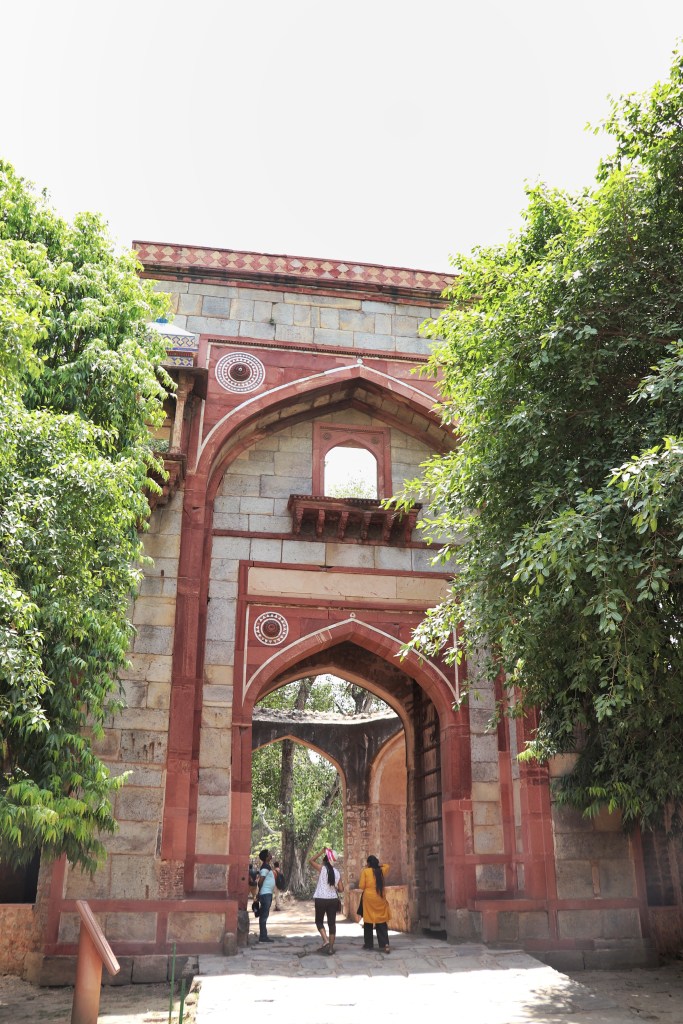
We also saw the Arab Sarai Gate, which literally means gate to the ‘resthouse’. It was built in 1560 – 1561 by Hamida Banu Begum for either the 300 arabs she brought back with her from Mecca, or Persian artisans working on the tomb.
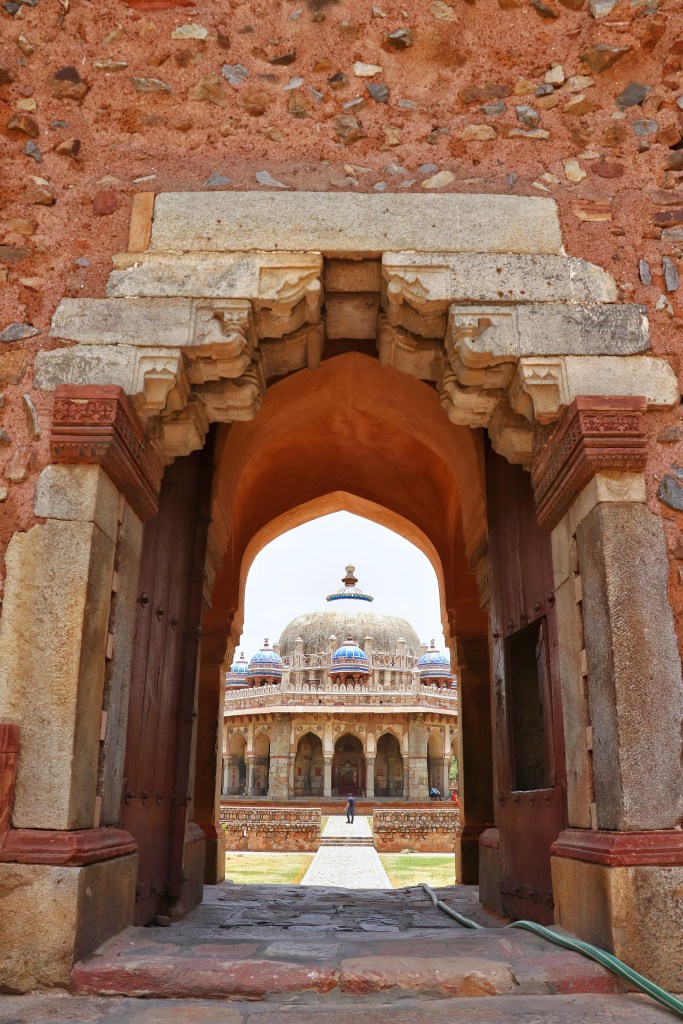
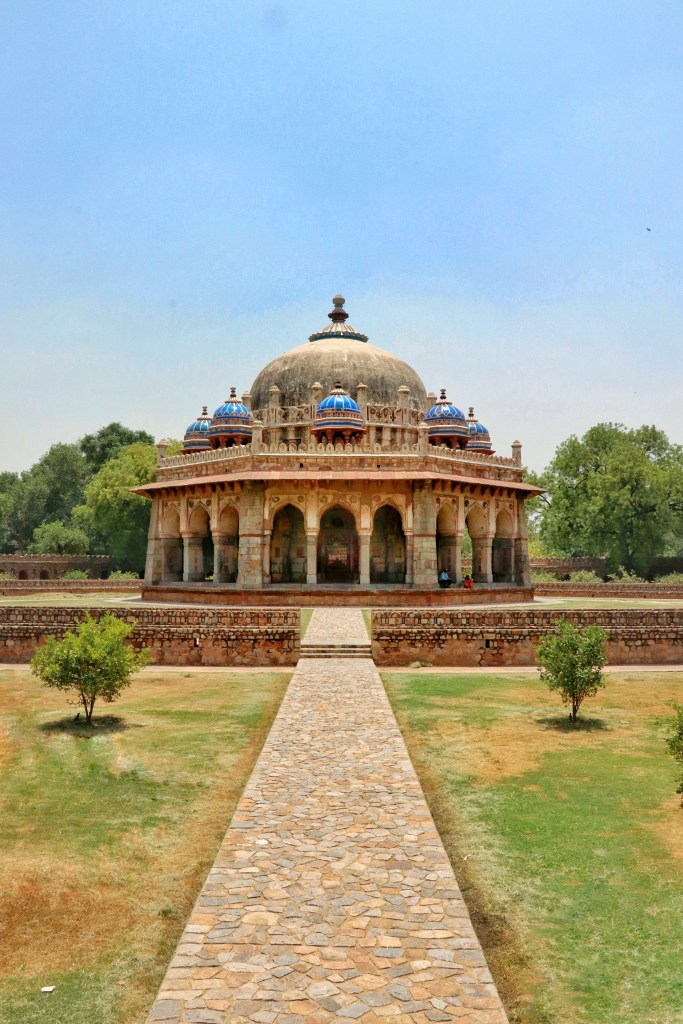
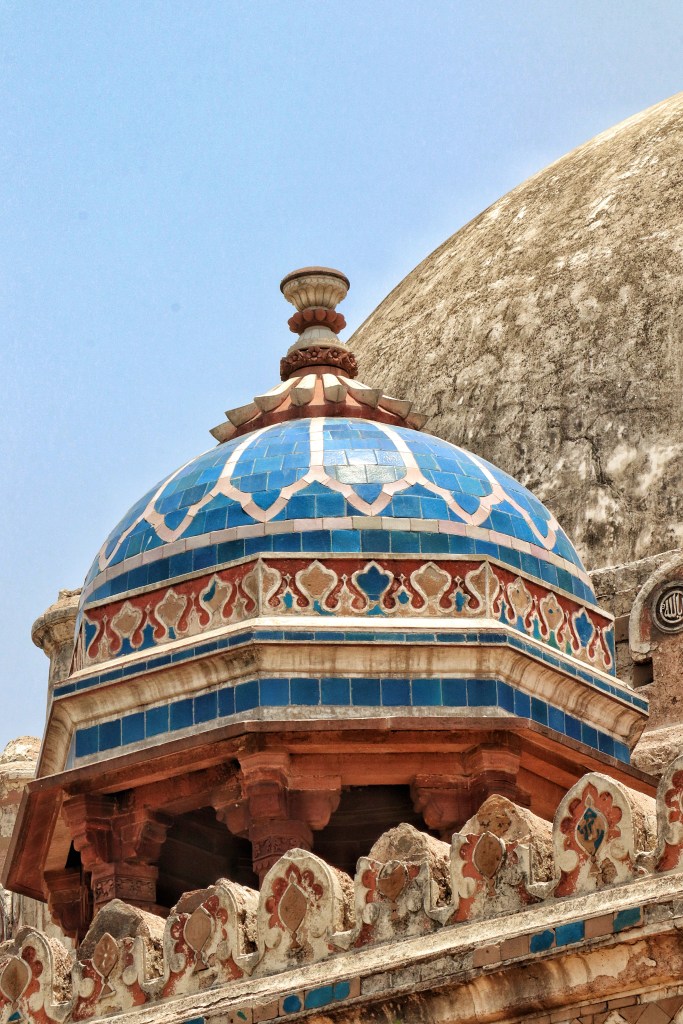
Located adjacent to Humayun’s Tomb is the Isa Khan Tomb, which is another magical monument that we saw and is absolutely beautiful. It is the final resting place of Isa Khan- a courtesan for Sher Shah Suri and his son Islam Shah Suri who died only at the age of 95 in the city today know as Delhi. It has beautiful artwork on the inside, with various inscriptions from the Quran. The Isa Khan mosque was also built at the same time as the tomb.
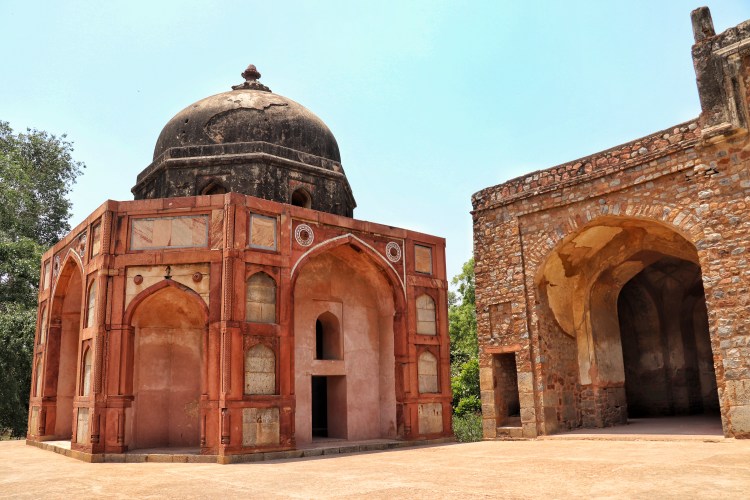
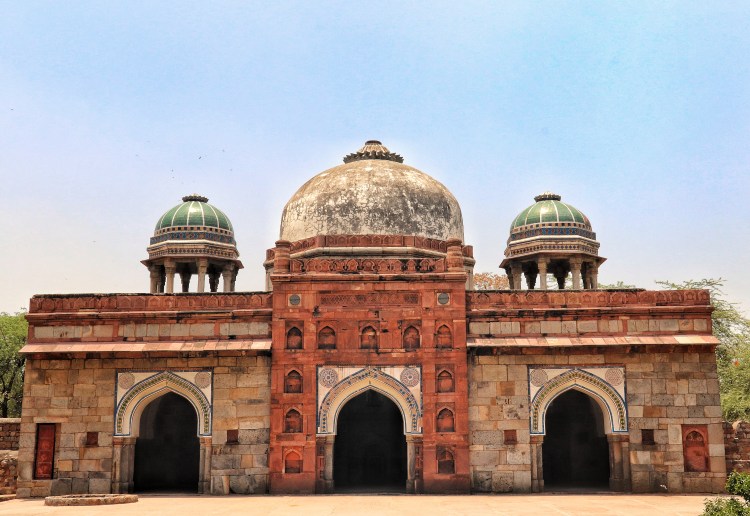
At last, we saw the Afsarwala Tomb and the Afsarwala mosque, which means ‘officer’s tomb’. It is strange that the mausoleum houses the tomb of an unknown person. The tomb could be of an officer, or erected by some officer.
We noticed that it is less crowded as compared to Red Fort or Qutub Minar which is good. Also, we got to know that the tomb has more than 100 graves inside it. We’d suggest you to visit this place once so that you experience the same ‘wow’ moment throughout your visit.
Nearest metro is Jawaharlal Nehru Stadium and the timings are 8 am to 6 pm.
 wanderersodyssey.travel.blog